
How to Sell Your Florida Home Without a Realtor (FSBO + Alternatives)
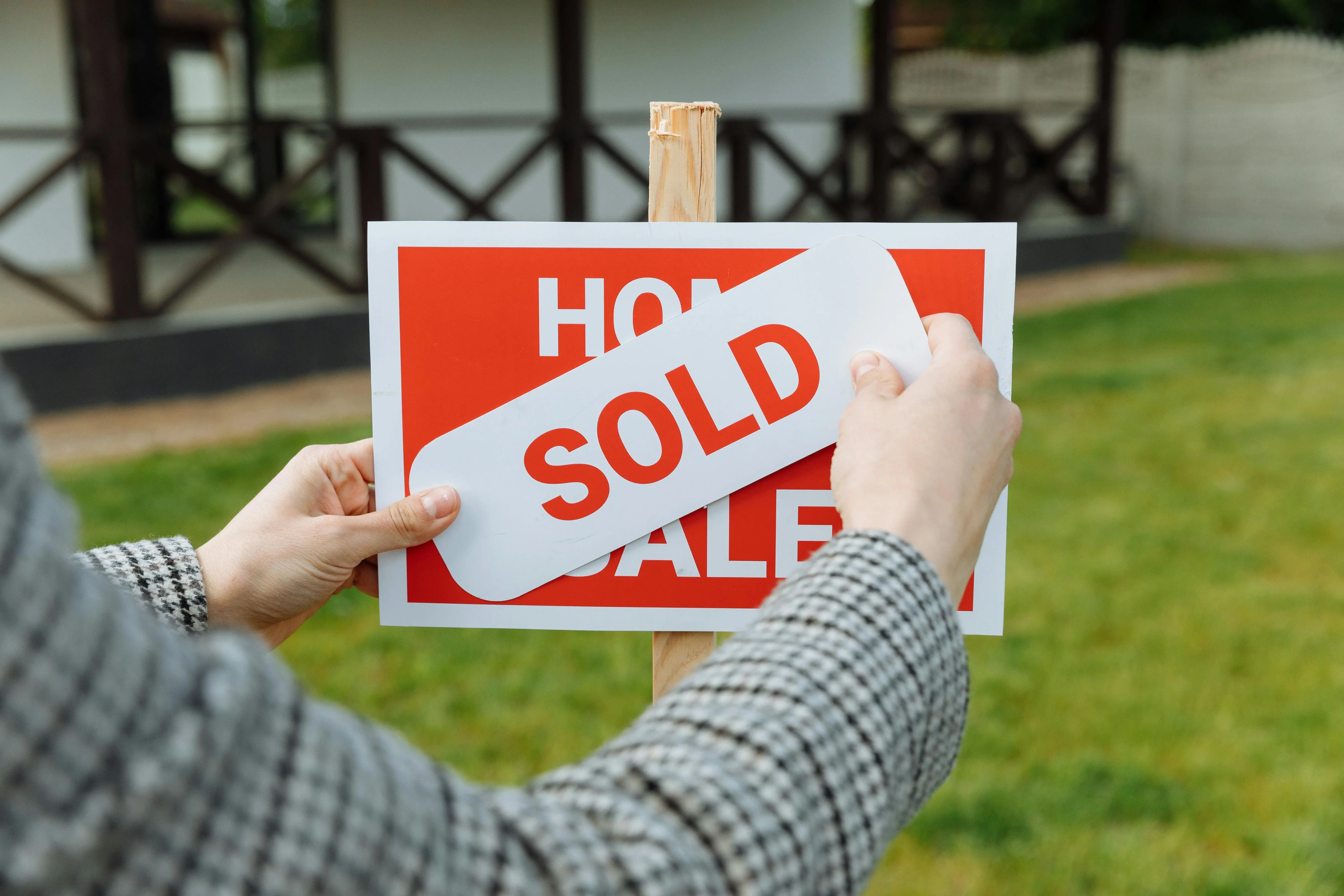
To save on listing agent commissions, you can legally sell your home without a realtor in Florida, also known as for sale by owner (FSBO). However, you must fill out the required disclosures, use a valid written contract, and close through a title company or real estate attorney.
While only 5% of homeowners go this route, it can help save on the listing agent commission. But the tradeoff is time spent marketing the property, navigating paperwork and potentially selling for a lower price.
We’ll walk you through how to sell your home without a realtor in Florida, including paperwork, costs and pros and cons, so you know what to expect and make the right decision for your situation. If you want to avoid the costs of a realtor and don’t want to deal with the stress of FSBO, you may also consider selling to a cash home buyer like Florida Cash Home Buyers. We’ll buy your house fast for cash and help you avoid commissions and fees.
What FSBO Sellers Need to Know
- You are responsible for all paperwork, marketing, and negotiations. Florida law lets you sell on your own, but you’re responsible for every step of the process. This includes creating the listing, coordinating showings, reviewing and negotiating offers, handling disclosures, and completing a valid contract.
- You save on the listing commission, which is typically 2.5% to 3.5% of the final sale price.
- You are not required to pay the buyer’s agent, but most do. Since the August 2024 National Association of Realtors (NAR) settlement, buyers must sign a written agreement with their agent before touring homes. They’ll often ask the seller to cover that commission as a concession in their offer. Budget 2.5%–3.5% for it and treat it as a saving only if you actually avoid it.
- A title company or real estate attorney must close the sale. This isn’t optional, and it’s the one professional every FSBO seller still needs.
Is Selling Without a Realtor the Right Option for You?
FSBO may be a good option if you already have a buyer or are knowledgeable about the local market. If you want to maximize exposure and minimize effort a traditional sale may be better. And if you need to sell quickly or the home needs significant repairs, a cash buyer may be your best option.
| Method | Best for | Associated Costs | Effort |
|---|---|---|---|
| FSBO | Sellers who already have a buyer or deeply understand the local market | Title company or real estate attorney fees, closing costs, and documentary stamp taxes only. You save the listing commission (2.5%–3%), but most FSBO sellers still pay the buyer’s agent. | High; marketing, showings, contracts, negotiations |
| FSBO + Flat-fee MLS | FSBO sellers who need broader exposure | $100–$500 for the listing, plus the costs above | High; same FSBO responsibilities with wider reach |
| Low-Commission Agent | Sellers who want professional help at a lower price | 1%–2% listing fee, plus any buyer-agent concession | Low; agent handles most responsibilities |
| Cash Home Buyer | As-is, inherited, or distressed homes; anyone who needs to sell fast | No commission or fees; but offer accounts for repairs and other costs | Low; straightforward offer with no fees |
How to Sell a House by Owner in Florida
Selling your home without a realtor in Florida can save you money on commissions, but it also means you’re responsible for pricing, marketing, showings and open houses, disclosures, paperwork and closing. We’ll walk you through the entire FSBO selling process, from determining market value to signing the final documents.
1. Determine a Competitive Price
Run your own comparative market analysis (CMA) on Redfin or Zillow. Start by looking at comparable homes in your neighborhood that have sold within the last three months. Filter for comps with similar square footage, number of bedrooms and bathrooms, lot size, and condition.
Since no two homes are identical, you’ll need to adjust for differences. For example, if a similar house with a renovated kitchen sold for $20,000 more, you may need to lower your estimate if your kitchen is outdated.
If you’re not comfortable determining your home’s value yourself, you can get a professional valuation through a BPO or appraisal.
- Broker price opinion (BPO): Less detailed and cheaper than a full appraisal, a real estate broker’s or agent’s estimate of market value typically ranges from $50 to $250 depending on the type.
- Appraisal: The most thorough option, appraisals are conducted by a state-licensed and state-certified appraiser. They typically range from $300 to $500.
Pricing is where FSBO sellers can lose the most money. Overpricing can cause your home to sit on the market, while underpricing can lead to handing the buyer thousands. It’s essential to do your due diligence and set a fair, competitive price.
2. Prepare Your Home for Sale
Once you’ve determined a listing price, you need to make your home presentable for prospective buyers before you put it on the market. This involves:
- Cleaning and decluttering the home to give buyers a good first impression
- Completing minor repairs and getting estimates for larger repairs to factor into the value
- Making small improvements like lighting or cosmetic touches that increase the home’s visual and curb appeal
- Staging your home to remove clutter and make your house look warm and inviting
- Taking photos to showcase your home or hiring a professional photographer to do so
If your house has significant damage and you don’t want to make repairs, you may consider selling your property as-is. That means it’s sold in its current condition, and you have no obligation to complete repairs if the buyer finds issues. Keep in mind that this will decrease your number of potential buyers, as most lenders require a property to meet certain standards for financing. It also does not relieve you of your duty to disclose known defects.
3. Complete Disclosures and Handle Paperwork
If anything, skipping a realtor raises rather than reduces your legal liability. In a FSBO sale, nobody else is checking your work, so it’s essential that you correctly fill out all of the required paperwork. Most of this paperwork is delivered to the buyer before they sign the purchase agreement, so have it ready early. When an offer comes in, you want to move on it, not scramble for documents.
Required Disclosures
- Standard property disclosure: Florida law requires home sellers to disclose known defects that aren’t readily observable to the buyer. This includes roof issues, plumbing and electrical problems, foundation or structural defects, environmental hazards, flood risks, code violations, and so on.
- Flood disclosure: Florida Statute § 689.302 also requires the seller to provide a flood disclosure that states that homeowners insurance does not cover flood damage, and it requires the seller to disclose whether you’ve filed a flood insurance claim, received assistance for flood damage, or know of any flooding that damaged the property during your ownership.
- Lead-based paint disclosure: The Environmental Protection Agency (EPA) requires this for homes built before 1978.
- Homeowners’ association disclosure: Florida Statute § 720.401 states that if the property is in a community with mandatory HOA membership, you must give the buyer a disclosure summary outlining fees, assessments, and use restrictions before the contract is signed.
- Radon gas notification: Florida Statute § 404.056(5) requires specific statutory language about radon to appear on at least one document signed at or before the purchase contract.
Depending on the property, you may also need to disclose coastal construction regulations, pending code enforcement actions, and a property tax summary. It’s also a good idea to gather any supporting documents such as a survey showing property boundaries, insurance claim information, blueprints, and anything else that can support the sale.
You may also consider a pre-listing home inspection. Although it’s optional, the inspection can uncover issues you may not be aware of and help you complete your seller disclosure form accurately. Home inspections in Florida generally cost $200 to $500, depending on the property size.
4. Choose a Title Company
No sale in Florida legally closes without a closing agent, and for most residential transactions, that’s a title company. It’s important to choose one early because the closing agent is a contract term. If you don’t have one when the buyer is ready to make an offer, you may be forced to decide under pressure later.
Title companies run the title search, clear any defects it turns up, issue title insurance, hold the buyer’s earnest money in escrow, pay off your existing mortgage, and prepare and record the deed and closing statement. Their services typically cost between $2,000 to $4,000. In many Florida counties the seller pays for the owner’s title policy, although it’s negotiable and custom varies by county.
You can also use a real estate attorney as your closing agent. It costs more, but an attorney can close the sale and represent your interests.
5. List and Market Your Home
The Multiple Listing Service (MLS) is the database that agents use to search for homes for their clients. It also feeds into the places that buyers look for homes on, such as Zillow, Realtor.com, and Trulia, so if you’re not on it, your home loses significant visibility.
Unless you already have a buyer in mind for your FSBO sale, listing on the MLS is key. Only licensed brokers can do it, so you must pay a flat-fee MLS service to list for you. In Florida, this typically runs $100 to $500, depending on the plan and where your listing syndicates.
Skipping a flat-fee MLS service to save a few hundred dollars can cost you significant time. However, there are also free or low cost channels to list your property, such as:
In addition to listing your home online, you can also:
- Use your network of friends, relatives or neighbors to spread the word about your house for sale.
- Put up a yard sign.
- Create and promote your own website or use social media.
6. Schedule Showings
After listing your home, you’re responsible for handling inquiries and scheduling showings. Prompt responses are crucial, as buyers may move on quickly if you delay. You may want to set up an online scheduling platform like Calendly to make it easy for potential buyers to schedule a viewing. Showings should be as convenient as possible for buyers, including evenings and weekends.
When you are showing the home to potential buyers, make sure to give them space to look around and talk amongst themselves.
7. Screen and Negotiate with Buyers
Once you start receiving offers, it’s essential that you screen prospective buyers. Ask for a pre-approval letter from financed buyers and proof of funds from cash buyers. This ensures that the buyer is serious and capable of completing the purchase, reducing wasted time and increasing the likelihood of a smooth transaction.
You may need to negotiate with potential buyers or their agents on price or terms. In many cases, sellers also consider making concessions to help close the deal and make their offer more appealing. Common concessions include:
- Covering some or all of the buyer’s closing costs
- Offering credits or repairs for issues discovered during inspections
- Providing a home warranty
- Paying other fees such as attorney or title costs
Keep in mind that the highest offer in price may not be the best. A slightly lower cash offer with no financing or appraisal contingency may net more and do so faster than a higher offer that asks for significant concessions.
8. Sign a Purchase Agreement
Once you accept an offer, both parties sign the purchase and sale agreement — the document that sets the price, terms, contingencies and dates. Most Florida sales use the FAR/BAR contract, the standard version or the ‘AS IS’ version, published jointly by Florida Realtors and The Florida Bar.
You may want to hire a real estate attorney to review or draft the agreement to minimize potential risks.
Your title company will then:
- Open escrow and hold the buyer’s earnest money
- Complete the title report
- Prepare title insurance policies
- Coordinate funds and documents for closing
After signing, stay on top of all contingencies, such as inspections, appraisals, and financing approvals. While these are primarily the buyer’s responsibility, you will need to respond to requests, provide necessary documentation, and allow access for a home inspection.
Consider using a spreadsheet to track each contingency, its due date, and completion status. This will help prevent missed deadlines and keep closing on track.
9. Close the Sale
On closing day, the buyer typically conducts a final walkthrough to confirm the property’s condition. The title company prepares the closing (settlement) statement, which itemizes every closing cost, credit, and your net proceeds. Read it line by line before you sign.
In Florida, sellers usually pay documentary stamp tax on the deed ($0.70 per $100 of value in most counties, $0.60 in Miami-Dade). You’ll also pay title service fees, recording fees, and prorated property taxes.
At closing, you sign the deed and affidavits, the buyer’s lender funds (if applicable), and then the title company records the deed with the county clerk. Once everything is complete, you’ll receive your net proceeds via wire transfer or check.
Estimated Costs of Selling FSBO in Florida
Florida sellers can save 2% to 3% on listing commissions when selling without a realtor, but there are still upfront costs involved. Some are optional, while others, like title-related fees, may be negotiated between buyer and seller or vary depending on the county.
| Expense | Approximate Cost | Definition |
|---|---|---|
| Flat-fee MLS listing (optional) | $100–$500 | Provides MLS exposure without a listing agent |
| Professional photos (optional) | $200–$500 | High-quality images to enhance your listing |
| Appraisal (optional) | $300–$500 | Helpful if you need professional valuation |
| Pre-listing inspection (optional) | $200–$500 | Identifies issues before buyer’s inspection |
| Attorney contract review (recommended) | $200–$500+ per hour | Review of the contract agreement |
| Title search, title insurance, closing services | $2,000–$4,000+ | Seller usually pays for owner’s title insurance in most Florida counties |
| Doc stamp tax on deed | $0.70 per $100 (0.7%) of sale price; $0.60 per $100 in Miami-Dade for single-family (0.6%) | State tax on deed transfers, paid by seller |
| Recording fees | $10 for the first page and $8.50 for each additional page | Charged by county clerk for deed recording |
| HOA estoppel certificate (if applicable) | $299 or less | Required in Florida to confirm HOA dues and status |
| Buyer’s agent commission | 2.5%–3% of sale price if you choose to offer it | Not required, but may help you attract more buyers |
Pros and Cons of Selling a House by Owner in Florida
The amount of work and attention to detail required by a FSBO sale isn’t for everyone, but it may be a good fit if you already have a buyer lined up or are familiar with real estate transactions.
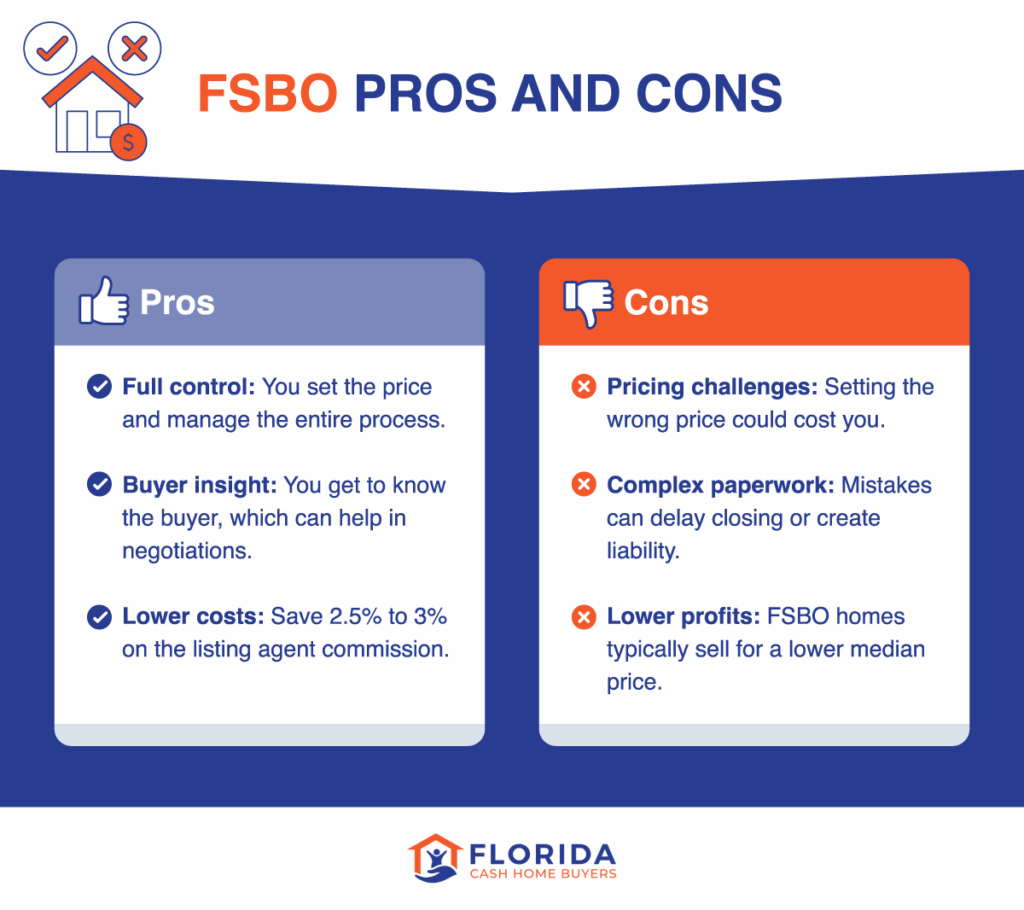
Pros
- Control over the process: You set the price and have total control over marketing and showing the property.
- Insight into buyers: Handling all interactions yourself means you’ll gain greater insight into who will buy your home, which may help negotiations.
- Savings on commissions: You avoid paying a listing agent’s commission (typically 2.5%–3%). However, most sellers still offer a buyer’s agent commission (2%–3%) to attract more buyers.
Cons
- Pricing accurately: Setting the wrong price costs you money or delays the sale, which can exceed the commission you saved.
- Managing complex paperwork: You’re responsible for contracts, disclosures, and legal compliance. Mistakes can delay closing or expose you to liability.
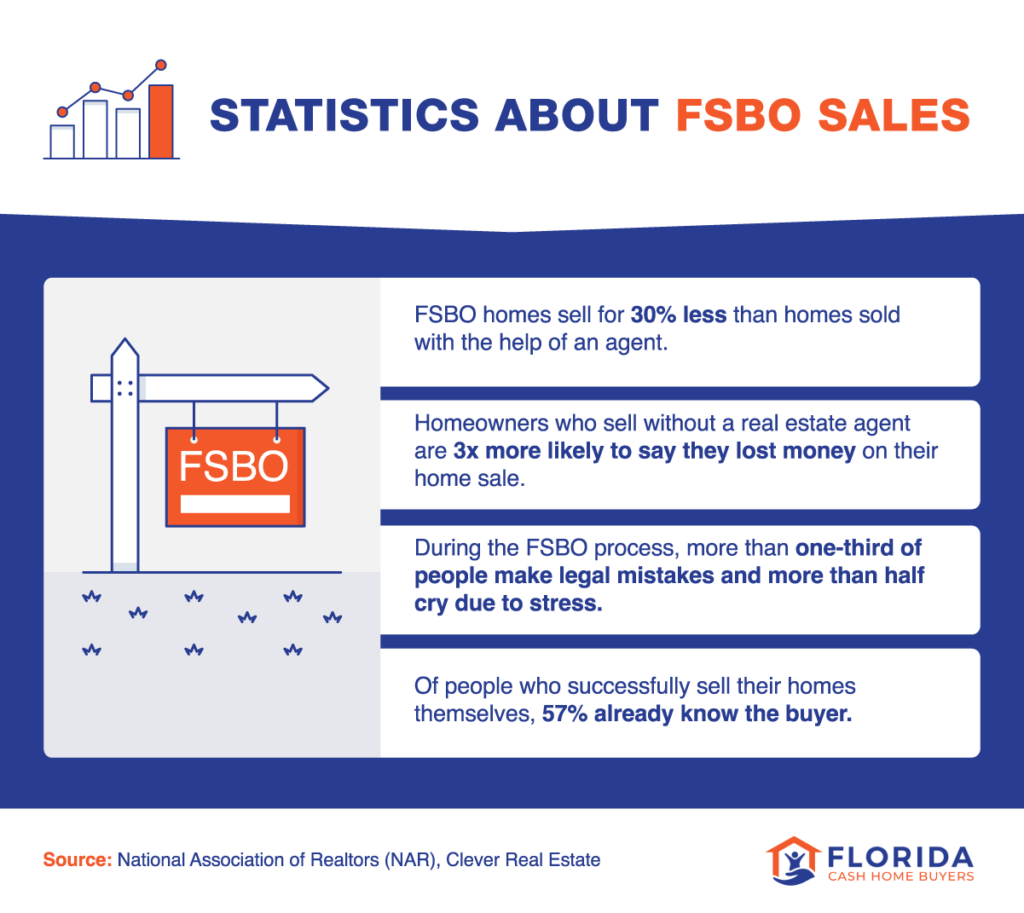
- Potentially lower net proceeds: According to statistics from the National Association of Realtors (NAR) in 2025, agents sold homes for the median price of $425,000, but FSBO homes sold at a significantly lower median price of $360,000.
Taxes After a FSBO Sale
Every seller’s situation is different, so it’s best to consult a tax professional for advice specific to your circumstances. Florida has no state income tax, so there’s no state-level capital gains tax on your sale.
In general, here’s what to expect.
- Property taxes: These are set locally and are prorated between you and the buyer at closing based on the closing date. Depending on when you close, you may see a credit or owe a balance on the settlement statement.
- Capital gain taxes: If you sell your home for more than you paid, you may owe capital gains tax on the profit. The exact amount depends on factors such as your income bracket, how long you’ve owned the property, and whether it’s your primary residence.
- For U.S. residents who have held the property for more than a year, the capital gain rates are typically equivalent to 15% to 20% of the profits, depending on your taxable income. High earners may also owe the 3.8% Net Investment Income Tax.
- If you owned the property for one year or less, the gain is taxed as ordinary income
- If you owned and lived in the home as your main residence for at least two of the last five years, you can generally exclude up to $250,000 of gain ($500,000 for a married couple filing jointly).
- Taxes on rental or vacation property: If you’ve used your home as a rental or vacation property, different tax rules apply. Rental income is taxable, and when you sell you may owe capital gains tax plus depreciation recapture on the depreciation you claimed (or were entitled to claim) while renting.
Sell Your Home Without a Realtor to Florida Cash Home Buyers
Selling your home doesn’t have to be stressful. If you’re feeling overwhelmed, let Florida Cash Home Buyers take some of the burden off of your shoulders. With just five to ten minutes of your time, we can give you an estimate, followed by a no-obligation cash offer on your Florida home. It’s that simple. Contact us for a free cash offer today!