

You can sell your Florida home if it has a tax lien, but the lien must be resolved before a home sale can close, meaning you’ll need to pay off, settle or negotiate the lien before transferring ownership.
Fortunately, homeowners have several options to make the process easier, such as negotiating a settlement, setting up a payment plan or working with a cash buyer who can handle the lien payoff and expedite the sale.
In this guide, we’ll break down how tax liens impact home sales, what steps to take, and why working with a cash home buyer like Florida Cash Home Buyers may be the fastest and easiest solution.
Understanding the Basics of Tax Liens
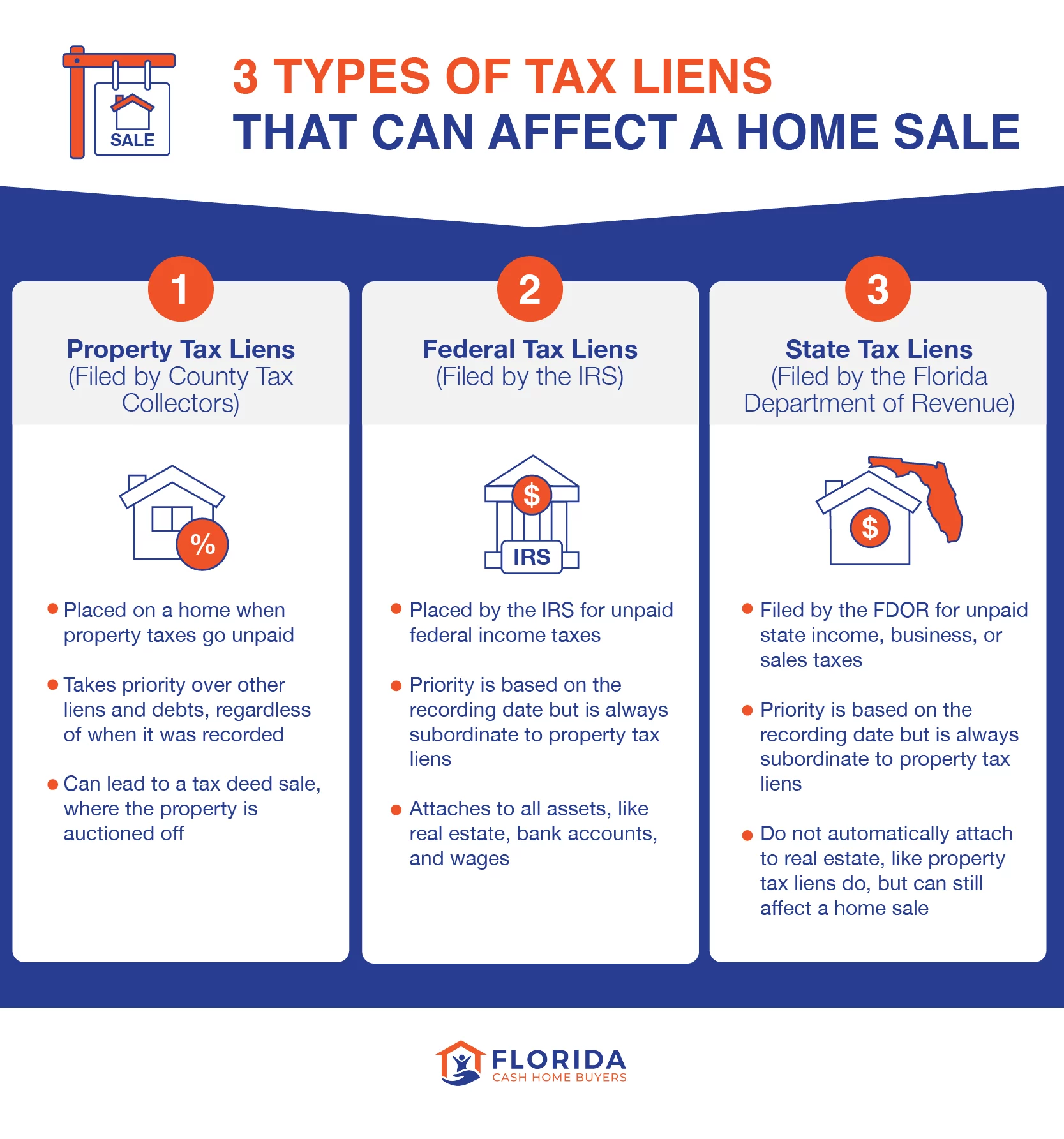
To better understand how tax liens impact the selling process, examine the three types of tax liens that can affect a home sale.
Property Tax Lien (Filed by County Tax Collectors)
- Imposed by local governments when property taxes go unpaid
- Takes priority over all other liens and debts, including mortgages, regardless of when other liens were recorded
- If unpaid, the county may sell a tax lien certificate to investors, which can eventually result in a tax deed sale where the property is auctioned off.
- Check your local county tax site for more information. If you live in Hillsborough County, Pinellas County, or Brevard County, we’ve pulled some resources for you to help you get started
Federal Tax Lien (IRS Liens on All Assets)
- Filed by the IRS when a taxpayer has unpaid federal income taxes
- Follows the “first in time, first in right” rule, meaning priority is determined by the recording date, except when a property tax lien exists, which automatically takes precedence
- Attaches to all personal and real assets, including real estate, bank accounts and wages
- If a taxpayer fully pays the debt, including interest and penalties, they may request an IRS lien release to remove the claim against their assets.
- If there is a federal tax lien on your home, the IRS has several resources and options that can help you determine the best path forward.
State Tax Lien (Florida Department of Revenue Liens)
- Filed by the Florida Department of Revenue for unpaid state income, business or sales taxes
- Priority is determined by the recording date, meaning it is typically junior to property tax liens and mortgages but may take precedence over unsecured debts
- Unlike property tax liens, state tax liens do not automatically attach to real estate but can still impact a home sale if recorded.
- You can learn more about the tax collection process on the Florida Department of Revenue website.
What Every Florida Homeowner Should Know Before Selling with a Tax Lien
A tax lien doesn’t automatically stop you from selling — but it does change how the sale works. Here are the key things to understand before listing your home.
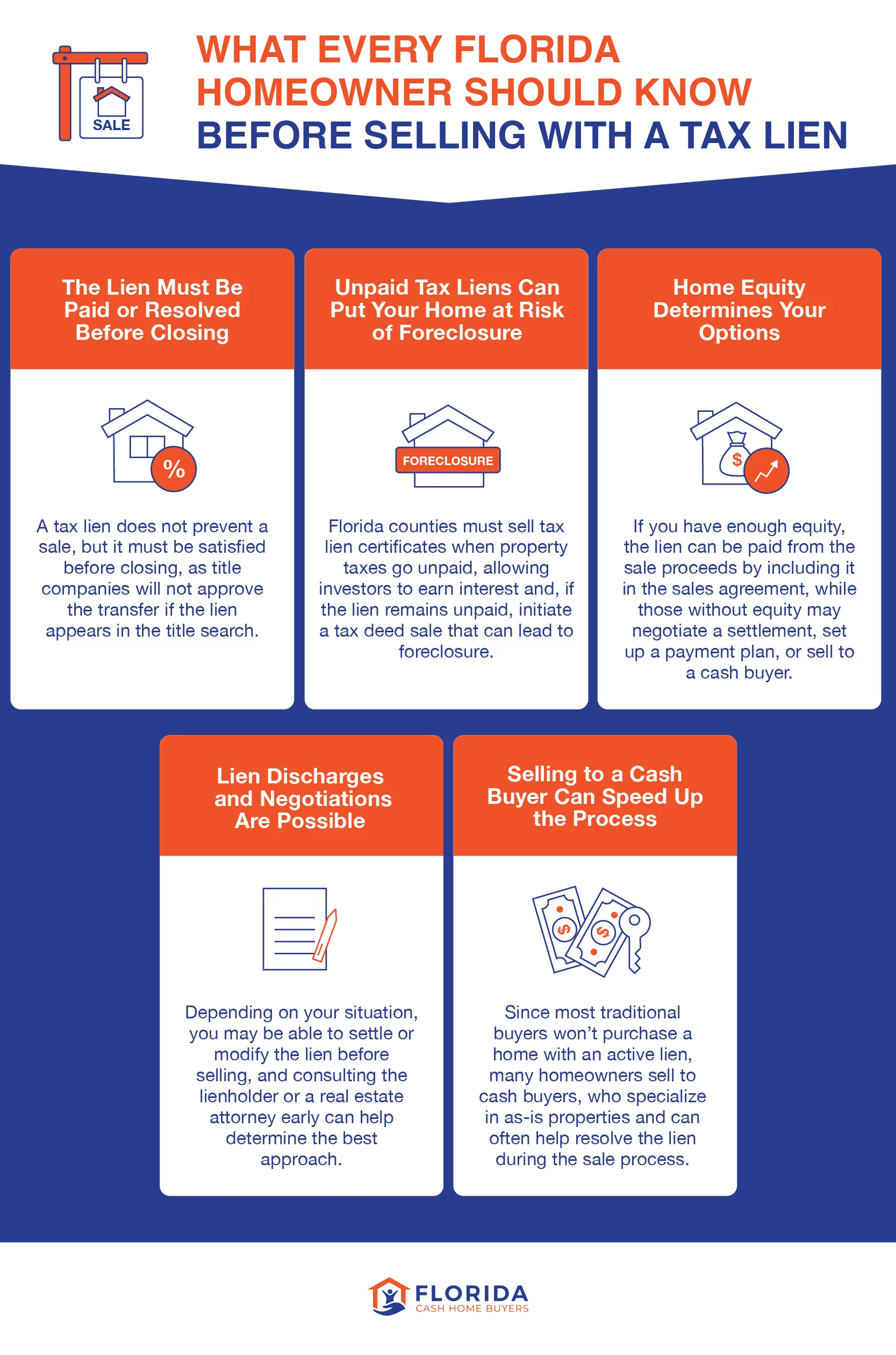
The Lien Must Be Paid or Resolved Before Closing
A tax lien stays attached to the property until it is paid, settled, or otherwise cleared.
Before closing:
- The title company conducts a title search
- Any tax liens are identified
- The lien must be paid or resolved before ownership transfers
- The lien is released and the transfer or ownership can proceed
If you have enough equity the lien can be paid with your sale proceeds. If you don’t have enough equity, you may want to consider selling to a cash home buyer, who can purchase the property as-is without mortgage lender restrictions. Many cash buyers work directly with lienholders to negotiate lien resolution, helping homeowners avoid delays and move forward with the sale more quickly.
Your Home Equity Determines Your Options
Equity is the difference between your home’s market value and the total amount you owe on liens and mortgages. The more equity you have, the easier it is to satisfy the lien at closing.
If you have enough equity:
- The lien can typically be paid from the sale proceeds
- The title company coordinates the payoff at closing
If you lack equity (meaning the lien amount is higher than your home’s value), you still have options:
- Negotiating a settlement to reduce the total amount owed
- Setting up a payment plan to resolve the lien over time
- Selling to a cash buyer who is willing to purchase the property with the lien in place
Lien Discharges and Negotiations May Be Available
Depending on your lien type, you may be able to:
- Negotiate a lower payoff amount, which may allow you to settle the debt for less than the full amount owed
- Negotiate a payment plan to pay the lien off over time, though this could delay the home sale
- Requesting a lien discharge (IRS), which removes the lien from the property title while allowing it to remain attached to other assets
- Applying for subordination (IRS), which does not remove the lien but allows another creditor, like a mortgage lender, to be paid first, and the IRS may approve it if the sale proceeds fully cover the tax debt, ensuring they receive payment before any funds go to the seller
If you’re considering any of these options, it’s best to contact the lienholder early or work with a real estate attorney to determine the best course of action.
Unpaid Tax Liens Can Put Your Home at Risk of Foreclosure
Unpaid tax liens can have serious financial consequences, including foreclosure or asset seizure if left unresolved.
- Fla. Stat. § 197.122 prioritizes property tax liens over all other debts, including mortgages, meaning they must be paid first when selling a home. Even if you continue making mortgage payments, failure to pay a property tax lien can still result in the loss of your home.
- Fla. Stat. § 197.432 requires Florida counties to sell tax lien certificates when property taxes go unpaid. Investors who buy these certificates earn interest on the debt, and if the lien remains unpaid, they can initiate a tax deed sale (Fla. Stat. § 197.502), forcing foreclosure.
If a tax lien foreclosure occurs, the property is auctioned off, and the tax lien holder — whether it’s the county or an investor — is paid first, ahead of mortgage lenders or other creditors, as outlined in Fla. Stat. § 197.582.
If the lien is federal, the IRS has the authority to place a levy on bank accounts, garnish wages or seize other assets to satisfy the debt. Since tax liens can trigger foreclosure or asset seizures, Florida homeowners should act quickly before losing control over the sale of their home.
Selling to a Cash Buyer Can Speed Up the Process
Selling a home with a tax lien can be challenging, especially in a traditional real estate transaction. Because most traditional buyers are unlikely to purchase a home with an active lien, many homeowners choose to sell to a cash buyer for a faster and more reliable sale.
Florida Cash Home Buyers specializes in purchasing homes as-is, even with an existing tax lien, and can assist in resolving the lien as part of the sale process, eliminating delays and complications.
How to Sell a House with a Tax Lien in Florida
Since tax liens must be resolved before closing, it’s important to understand your available options, legal obligations and potential challenges before listing your home. Here’s how to navigate the sale while ensuring the lien is properly handled and the transaction moves forward smoothly.
1. Confirm the Lien Amount and Details
Before listing your home, you must first understand exactly how much is owed and who holds the lien.
- Request a title search through a title company or real estate attorney to identify all liens attached to the property.
- Contact the lienholder (the IRS, Florida Department of State or county tax office) to verify the outstanding balance, penalties and fees.
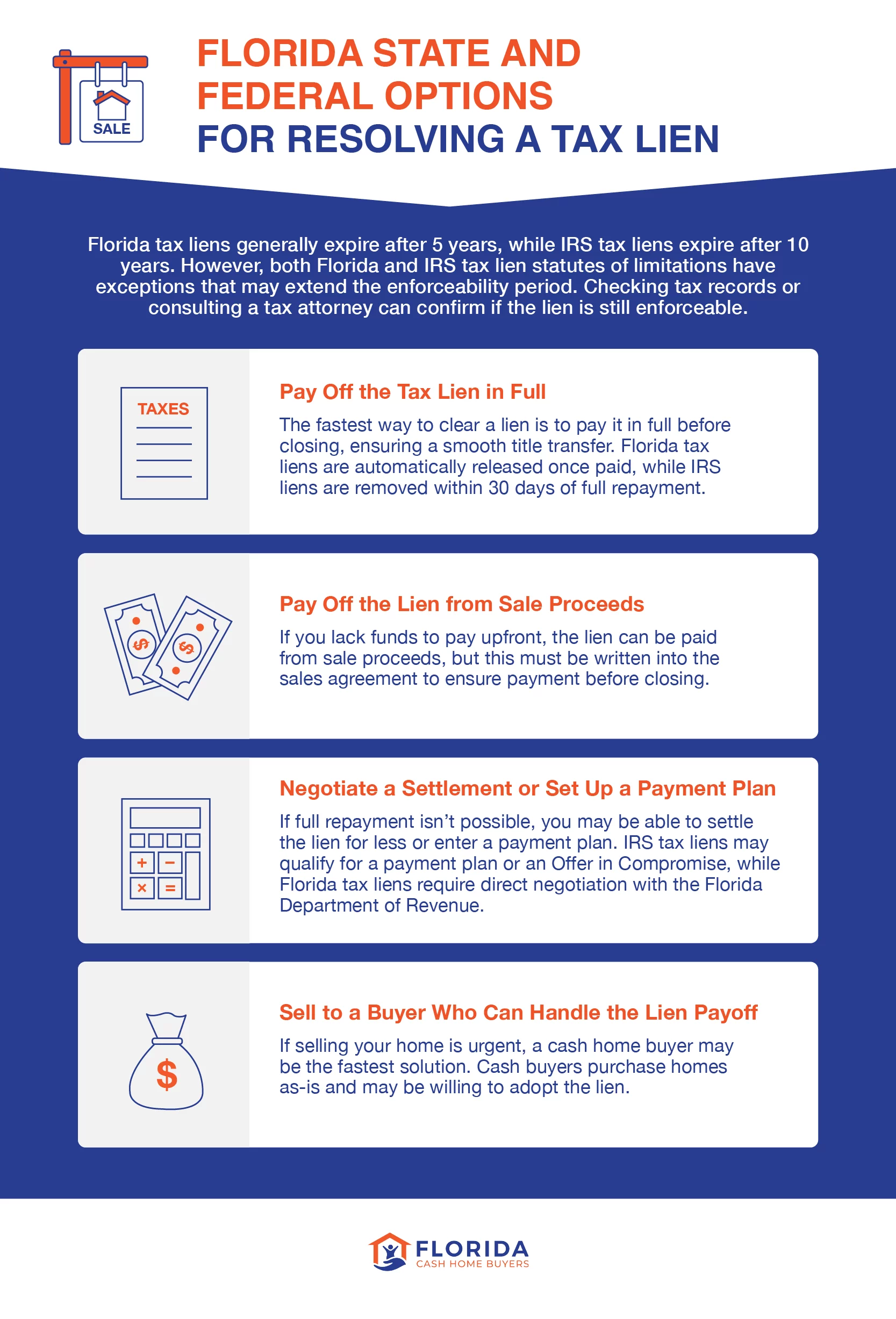
- Confirm the lien is still valid. Both Florida law and federal law impose a statute of limitations on tax liens.
- Florida: Under Fla. Stat. § 95.091, a Florida tax lien expires 5 years after the tax becomes delinquent unless legal action is taken to enforce it. However, there are exceptions if the tax certificate has been sold or the property qualifies for homestead exemption.
- Federal: For IRS tax liens, the statute of limitations is generally 10 years from the date of assessment (Internal Revenue Manual § 5.17.2). Once this period passes, the IRS can no longer legally enforce the lien, unless certain actions extend the timeframe.
Some lien holders may offer settlement options, such as a reduced payoff amount or an installment plan, which could make resolving the lien easier before closing.
2. Choose a Lien Resolution Strategy
Understanding both Florida and federal tax lien resolution strategies can help you determine the best approach and ensure a smoother, more efficient sale process.
- Pay off the lien upfront: The most direct way to resolve a tax lien is to pay it off before closing, ensuring a smooth sale and preventing any delays in transferring the title. Once fully paid, the lien no longer has a legal claim on the property, but additional steps may be needed to remove it from official records. However, if you don’t have the money to pay off the lien, there are other options.
- Pay off the lien from the sale proceeds: You may be able to use the proceeds of the sale to cover the debt. However, this must be worked into the sales agreement to ensure the lienholder is paid before ownership transfers.
- Negotiate a settlement or payment plan: If paying off the lien in full isn’t feasible, you may be able to settle the debt for less than the total amount owed or arrange a payment plan to continue making payments while selling the home. These options are primarily available for IRS tax liens, but Florida also allows installment agreements and, in some cases, negotiated settlements.
- Sell to a buyer who can handle the lien payoff: Cash buyers specialize in purchasing homes as-is, even if the property has a tax lien, and often handle the lien payoff or negotiate with the lienholder on your behalf — eliminating delays and reducing stress.
3. Work with a Title Company or Closing Attorney
While Florida law does not require buyers or sellers to hire an attorney to close a home sale, working with a title company or closing attorney is recommended, especially when selling a property with a tax lien. These professionals help protect your rights, ensure proper lien resolution and facilitate a smooth closing process.
If the lien is being paid off using sale proceeds, the title company or closing attorney will ensure the lienholder receives payment before ownership transfers. If a settlement or negotiated payoff was arranged, they will also coordinate the lien release, ensuring it is properly recorded and removed from the property title. For homeowners selling to a cash buyer, the closing attorney may negotiate directly with the lienholder, helping to settle or reduce the debt and allowing for a faster closing.
4. Close the Sale and Transfer Ownership
Once the tax lien is paid off, settled or discharged, the title is cleared, and the sale can officially move forward. If selling through a traditional buyer, the buyer’s mortgage lender will conduct a final title check before approving the sale, ensuring that all outstanding liens have been resolved. This process can sometimes cause delays if last-minute issues arise.
If selling to a cash buyer, closing can happen quickly without financing delays. At closing, the lien is officially removed, ownership transfers to the buyer and you receive any remaining sale proceeds, if applicable.
The Benefits of Choosing a Cash Buyer for a Tax Lien Home Sale
Selling a house with a tax lien can be stressful and complicated, but a cash buyer can help simplify the process and remove many of the common roadblocks.
- No repairs needed: Sell your home as-is, even if it has tax liens or other issues.
- Fast closing: Sell fast and as-is to professionals who have navigated similar issues.
- Lien negotiation assistance: Some cash buyers work directly with lienholders to handle lien payoffs, reducing hassle for sellers.
- No realtor commissions or closing costs: Keep more of the proceeds from the sale.
- Avoid foreclosure: Selling quickly prevents credit damage and helps homeowners move on without financial burdens.
How a Cash Sale Works With a Tax Lien
- Get a cash offer: A cash buyer will assess your home’s value and make a fair, no-obligation offer.
- Conduct a title search: The contract is sent to a title company, which orders a title and lien search to verify outstanding debts.
- Schedule a property inspection: The buyer schedules an inspection to confirm the property’s condition and estimate repair costs.
- Close the sale: Once the lien is cleared and everything looks good, the sale is finalized.
- Receive the funds: After signing the closing documents, the proceeds are wired to your bank account or paid via certified cashier’s check.
Navigating a Tax Lien Sale with Confidence
Selling a house with a tax lien in Florida is possible, but it requires careful planning and the right approach to ensure the lien is resolved before closing. For those looking for a quick and painless solution, selling to a cash buyer can eliminate financing delays and even provide assistance with lien negotiations, making the process smoother.
If you’re facing a tax lien and need to sell quickly, working with an experienced cash home buyer can help you resolve the lien and close the sale in as little as 15 to 30 days. Contact Florida Cash Home Buyers today for a no-obligation offer and take the next step toward selling your home with confidence.